


This is a test title for demonstrative purposes
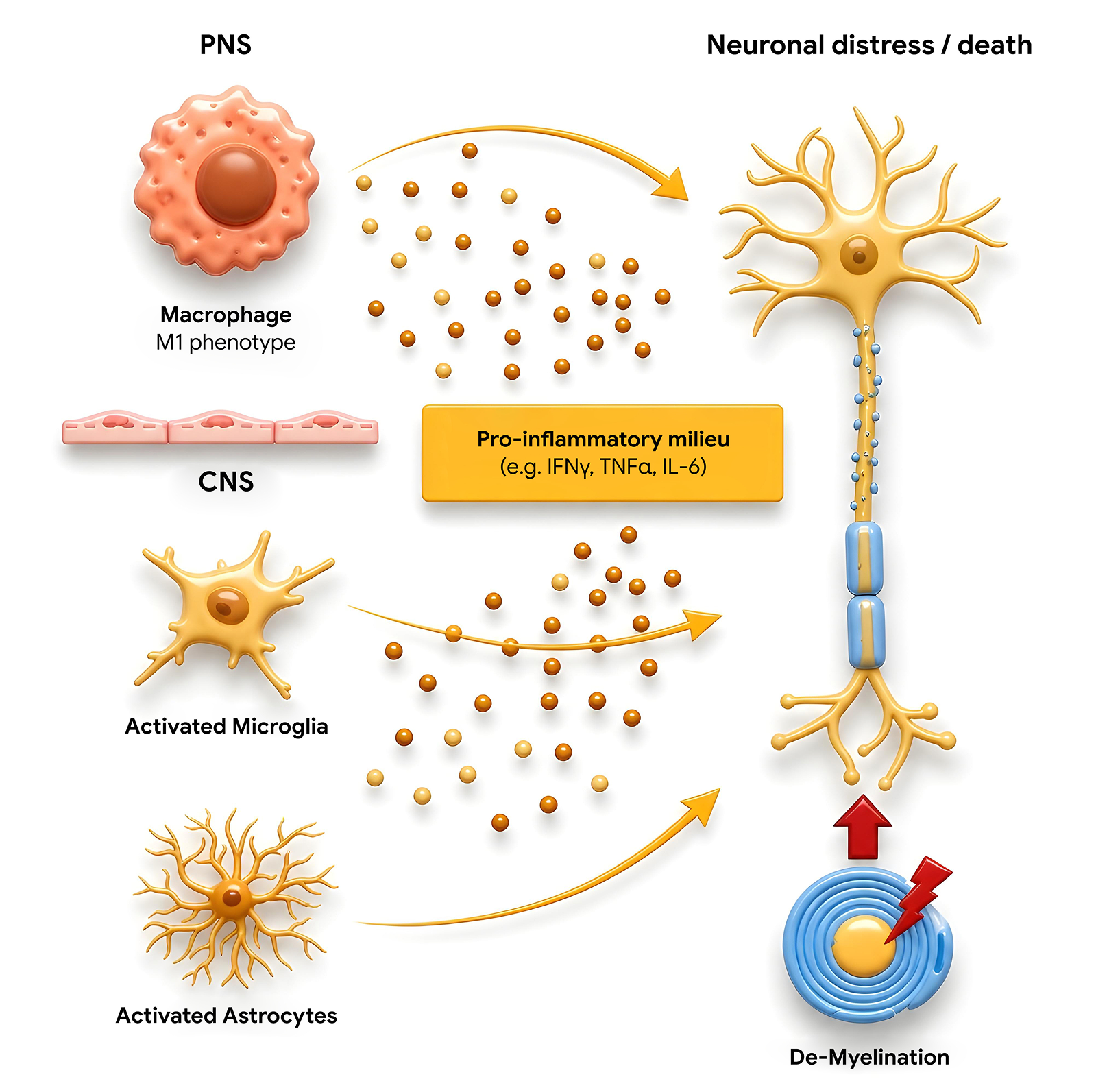
Neuro‑inflammation is a key driver of many neurological diseases contributing to tissue damage, demyelination, and disease progression
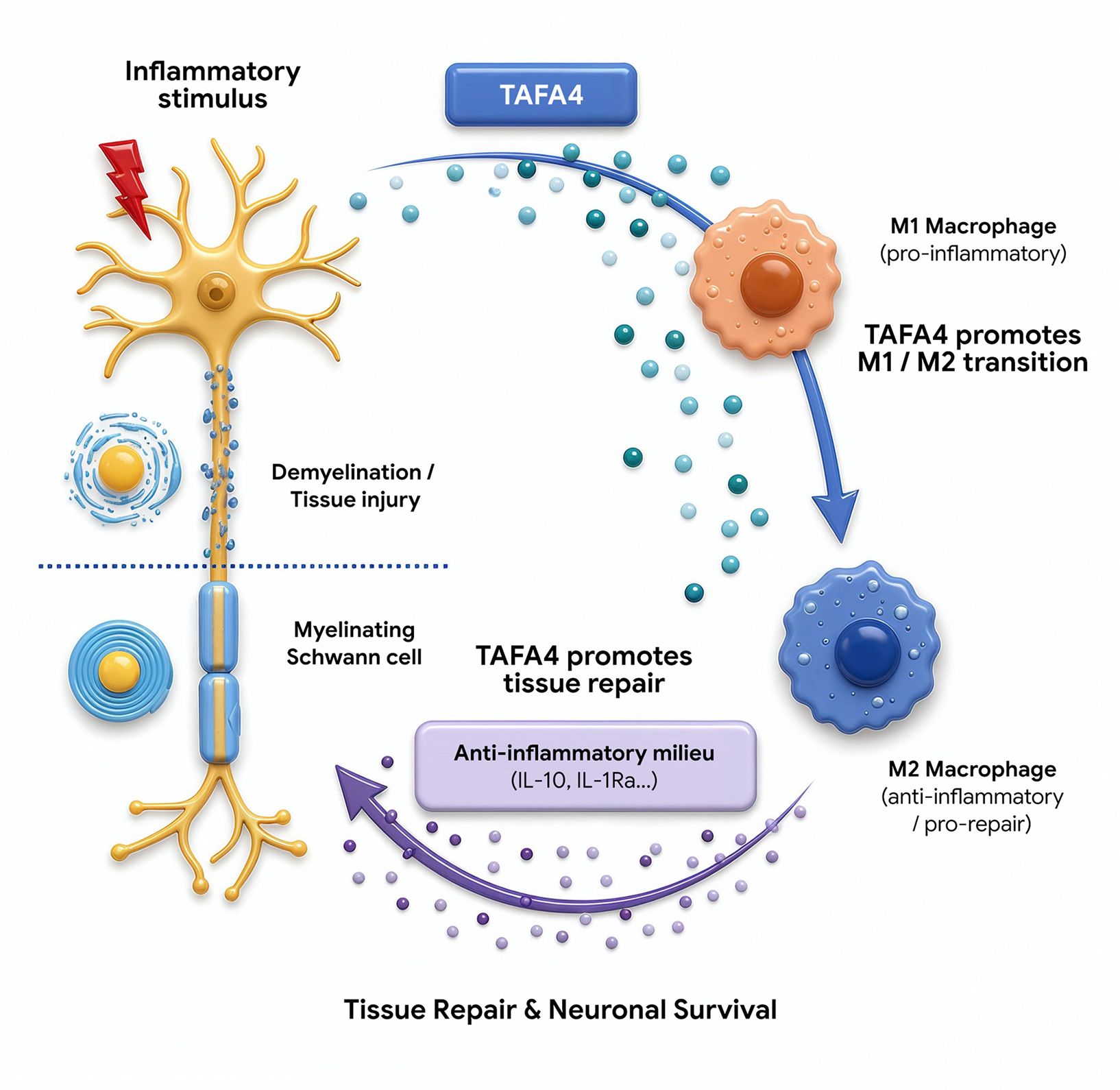
TAFA4 is an endogenous neurokine secreted by neurons in response to inflammation, where it functions to limit tissue damage and support repair. These properties were first characterized by one of Temper’s co-founders.
By targeting the critical interface between neuronal biology and immune cells, the company aims to:
- Modulate the neuro-immune microenvironment
- Resolve pathological acute and chronic inflammation
- Promote protective immune responses and tissue repair
Illustrative mechanism
Technology Platform

First‑in‑class neurokine platform
We are pioneering a therapeutic approach based on TAFA4 biology. Neurokines regulate immune responses through physiological signaling pathways that control tissue homeostasis. TAFA4, a neurokine naturally secreted by neurons in response to inflammation, helps to limit cell damage and promote tissue repair.
Temper Bio aims to restore neuro-immune balance rather than simply blocking inflammation.

Targeting neuro-immune signaling
Neuroinflammation is driven by dysregulated communication between the nervous system and immune cells. TAFA4 modulates immune cell behavior, shaping macrophage and microglial responses involved in the control of inflammation and tissue repair.
By modulating these signaling pathways, Temper Bio’s approach aims to:
Suppress inflammation at its source, before downstream damage occurs. Reprogram macrophages and microglia toward repair-supporting states. Restore tissue homeostasis through endogenous repair mechanisms. This strategy targets the upstream drivers of neuroinflammation rather than downstream mediators.

Structure‑driven design for targeted, durable Neuro‑Immune modulation
Temper Bio develops rationally engineered fusion proteins to provide sustained, targeted modulation of neuroinflammation where and when needed. By combining a highly specific neuro-immune targeting domain with an IgG Fc backbone, these molecules achieve long‑acting exposure, predictable pharmacokinetics and infrequent dosing while maintaining tight selectivity for disease-relevant neuro‑immune pathways. Their structure is further engineered to access key neuro‑immune interfaces, including peripheral nerves and, when required, the central nervous system through blood–brain barrier–crossing strategies. This enables direct engagement of disease driving cells and circuits while limiting off‑target immune suppression.
Broad neuroinflammatory applicability

Peripheral Demyelinating Neuropathies: CIDP & GBS
CIDP (Chronic Inflammatory Demyelinating Polyneuropathy) and GBS (Guillain- Barre`| Syndrome) are immune-mediated disorders of the peripheral nervous system in which aberrant immune responses target myelin and axons, leading to demyelination, nerve damage, and progressive motor and sensory deficits. In GBS, an acute and often severe inflammatory attack on peripheral nerves can result in rapid paralysis, while CIDP follows a chronic, relapsing course with cumulative nerve damage. Macrophage-driven inflammation plays a central role in both conditions.
TAFA4, by modulating macrophage polarization toward pro-resolution and repair-promoting phenotypes, may help limit inflammatory nerve damage while supporting remyelination and functional recovery, addressing both the acute inflammatory insult and the longer-term repair deficit.

Chronic neuroinflammatory conditions: Multiple Sclerosis (MS)
Multiple sclerosis is characterized by recurrent immune-mediated attacks on myelin in the central nervous system, leading to demyelinating lesions, axonal injury, and progressive neurological disability. Persistent neuroinflammation, driven by dysregulated T cells, B cells, infiltrating myeloid cells, and activated microglia, undermines endogenous remyelination and repair. Restoring neuro-immune homeostasis, reducing pathological inflammation while enabling repair, is a key unmet therapeutic need that TAFA4 biology is positioned to address.

Neurodegenerative disorders: Alzheimer's disease, Parkinson's disease & ALS
In Alzheimer’s disease, chronic microglial activation and sustained neuroinflammation contribute to synaptic loss, amyloid plaque accumulation, and tau pathology, accelerating neuronal death and cognitive decline. In Parkinson’s disease, neuroinflammation driven by activated microglia and infiltrating peripheral immune cells amplifies dopaminergic neuron loss in the substantia nigra. In amyotrophic lateral sclerosis (ALS), persistent activation of microglia and macrophages contributes to progressive degeneration of upper and lower motor neurons, leading to muscle weakness, paralysis, and respiratory failure.
Across these conditions, the inability to switch from a pro-inflammatory to a pro-repair immune state is a key driver of disease progression. By modulating microglial responses and promoting protective neuro-immune signaling, TAFA4 biologics aim to stop neuronal dysfunction, and support endogenous repair mechanisms.